
 bearoff
Grown-ups still play. We just call it something else.
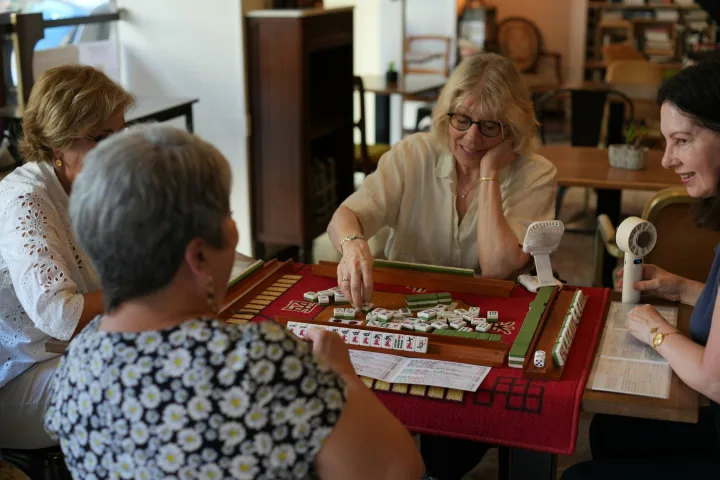
Why we never outgrow games, and what keeps pulling us back.
Somewhere between school and our first proper job, a lot of us decided we'd stopped playing games. Then we started doing the crossword on the train. Joined a pub quiz team. Kept a word-game streak alive for 200 days. Argued with a sibling over a card game at Christmas as if it were a legal matter.
We never stopped playing, we just stopped calling it that. So what keeps pulling us back?
We like picking our own challenges
Nobody needs to get a small ball into a hole 400 metres away. If that were the point, you'd walk over and drop it in. Golf only works because everyone agrees to do it the hard way.
The philosopher Bernard Suits put it neatly: playing a game is "the voluntary attempt to overcome unnecessary obstacles". The important word is voluntary. Nobody makes you do the crossword, which is exactly why it feels like yours. Grown-up life doesn't hand out many challenges we get to choose.
Getting better never gets old
Remember the first time you finished a crossword without peeking at the answers? Or finally spotted the move you'd been missing for weeks? That small, private glow doesn't fade with age.
Games are good at showing you your own progress. The clue that stumped you last year gets solved over breakfast. The friend who used to beat you every time now has to stop and think. Not many jobs make improvement that easy to see.
Just hard enough
You know the feeling: you look up from a puzzle and an hour has gone. That tends to happen when a challenge is just hard enough. Too easy and you're bored. Too hard and you give up.
The games we keep for life are the ones that stay just hard enough, however good we get. Snap loses its charm by the age of eight. Backgammon, chess or bridge keep finding new ways to surprise you, so there's always a next step.
A small world with its own rules
When a game starts, the rest of the world steps back for a bit. There's a board, some rules and stakes that only matter inside the game. It's sometimes called the "magic circle".
Inside it, losing costs you a little pride and, occasionally, the washing-up. That makes it a safe place to take a risk, try a daft move or be wrong in front of someone. Most of adult life asks us to look competent. A game lets you be terrible at something and laugh about it.
Company without the effort
Adults sometimes shy away from asking "Do you want to hang out?" It feels oddly exposed. "Up for a round of cards?" is much easier. The game does the asking for you.
Then it supplies the conversation: a lucky draw, an unlikely comeback, a move that needs explaining. Nobody has to be interesting on demand. And for a lot of us, the company is the reason we keep playing longest.
Why it changes but never stops
Children play to learn how the world works. Adults play to rest from it for a while. And later in life, a regular game can be one of the steadiest threads in a week.
The reasons shift. The pull doesn't. We're still the same people who wanted one more round before bed.
The short version
- Challenges are more fun when we choose them.
- Games make it easy to see yourself getting better.
- The ones we keep are just hard enough, however good we get.
- Low stakes make it safe to be wrong.
- A game gives us company without anyone having to try too hard.
- Why we play changes over a lifetime. That we play doesn't.
Fancy a game?
No password, no download - and your opponent can take their turn tomorrow.
Play in your browser
Angela
One of the top 10 sweetest people, probably. German by birth, delightfully unserious by nature. By day, she shapes stories; by night, she beats her boyfriend at backgammon and writes poetry.