
 bearoff
Tavla, Tavli, Nard: How Backgammon Became a Global Game
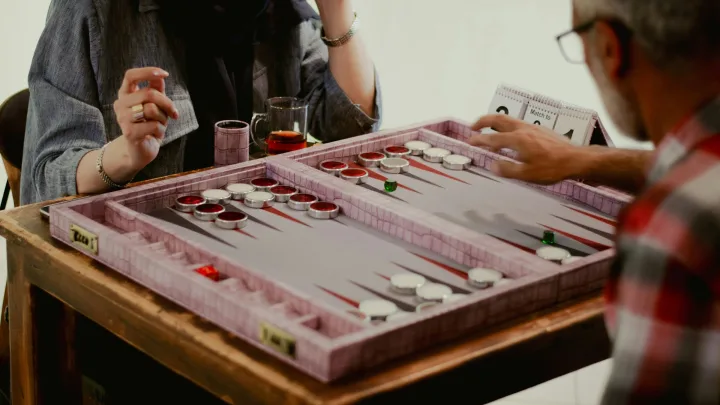
You might know it as backgammon, but travel a little and the name starts to change.
In Turkey, it’s tavla. In Greece, tavli. In Iran, takhteh nard. In Russia and parts of the Caucasus, you’ll hear narde or nardi.
The board may look familiar, but the game has developed its own character in different parts of the world. Rules have evolved, local names and vocabulary have appeared, and backgammon has become part of everyday social life.
In some places, it’s a serious competitive game. In others, it belongs just as naturally on a café table, next to a glass of coffee or tea.
Where did backgammon come from?
Backgammon’s story goes back thousands of years to Mesopotamia, where ancient board games already combined dice, pieces and a race around a playing track.
The Royal Game of Ur, dating to around 2600 BCE, is one early example. Later games such as Persian nard and Roman tabula brought the game closer to the backgammon we know today.
There was no single moment when backgammon was invented. It evolved as it spread, picking up new names, rules and traditions along the way.
Iran: nard and the tea house
In Iran, backgammon is known as takhteh nard, literally “nard board”, connecting the modern game with the country’s long Persian tradition of nard.
Persia played an important role in the development of the tables games we recognise today. The familiar 24-point board was already present in ancient Persian versions, although the exact relationship between these early games and modern backgammon is still debated.
The game also became part of Iranian tea-house culture. Tea houses have traditionally been places to meet, talk and spend time together, making them a natural setting for a game that can unfold alongside conversation.
You can make a move, take a sip of tea and keep talking while your opponent thinks. The board gives you something to do together without demanding that it become the entire occasion.
Greece: tavli and the afternoon game
In Greece, the game is usually called tavli, but that name covers more than one version.
A traditional tavli session can include Portes, which is closest to standard backgammon, as well as Plakoto and Fevga, each with its own rules and strategies.
Tavli has long been part of Greek social life, played in cafés, homes and outdoor spaces. It fits naturally into the relaxed rhythm of sitting with friends, having a coffee and letting a game unfold alongside the conversation.
And because the three games are played on the same board, knowing how to play one doesn’t necessarily mean you’ve mastered the others.
Turkey: tavla and the coffeehouse
In Turkey, backgammon is tavla, and it has a particularly strong connection with kahvehane, the traditional Turkish coffeehouse.
Coffeehouses became important social spaces during the Ottoman period, where people gathered to drink coffee, talk, exchange news and play games. Tavla became part of that culture and remains a familiar sight in cafés and homes today.
A game can be quick and lively, played alongside conversation rather than as a separate activity. There is also a rich vocabulary around tavla, including traditional names for dice rolls that reflect the game’s Persian and Ottoman history.
For many players, tavla isn’t simply something you sit down to play. It is part of how you spend time together.
Russia and the Caucasus: narde
As the game moved further north and east, it developed into traditions known by names such as narde, nardi and nardy.
One popular form is long narde, which looks familiar but plays quite differently from international backgammon. There is no hitting; instead, players concentrate on building blocks and moving their checkers safely around the board. The result is a familiar-looking board with a rather different personality.
Narde is also played as a social game, at home and in public settings, giving friends and family another reason to sit down together.
What makes backgammon so social?
There’s a reason backgammon has fitted so naturally into coffeehouses, tea houses and family gatherings across the region.
The rules are approachable, turns are relatively quick and there are natural pauses between decisions. You can play while talking, drink your coffee between turns or watch another game happening nearby. That makes it easy for the game to become part of the occasion rather than the entire occasion.
It’s also easy to leave a game and come back to it, which has made it just as comfortable at a family table as in a busy café.
One board, many traditions
Today, you can find backgammon in homes, cafés and clubs around the world, as well as on phones and laptops.
The game has come a long way from the ancient race games of Mesopotamia, evolving through Persia, the Mediterranean and beyond. Along the way, it picked up new names, rules and traditions while keeping the basic ingredients that make it recognisable.
Tavla. Tavli. Takhteh nard. Narde. Backgammon.
The details may change, but the basic ritual remains familiar: sit down with someone, roll the dice, make a move and see what happens.
Maybe that’s part of the reason the game has lasted so long. The board gives you a game to play, but it also gives you a reason to sit down together.
Fancy a game?
No password, no download - and your opponent can take their turn tomorrow.
Play in your browser
Angela
One of the top 10 sweetest people, probably. German by birth, delightfully unserious by nature. By day, she shapes stories; by night, she beats her boyfriend at backgammon and writes poetry.