
 bearoff
From ancient Persia to your phone: why has backgammon lasted so long?
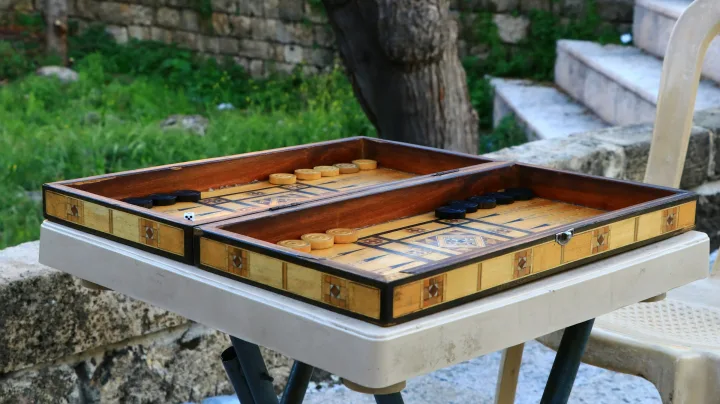
Backgammon has been around for thousands of years.
It has travelled across continents, through empires and between cultures. It has been played in ancient cities, Roman taverns, Persian courts, cafés, homes and parks.
And somehow, it’s still here.
Today, you can play backgammon on your phone with someone on the other side of the world.
So what makes this particular game last?
Where did backgammon come from?
The exact origins of backgammon are difficult to pin down. Its history reaches back thousands of years, with ancient board games that share some of its characteristics appearing across the Middle East and Mediterranean.
One important ancestor was tabula, a Roman game similar to modern backgammon. Another was nard, a Persian game that developed into a form much closer to the game we know today.
As these games travelled and evolved, so did the rules.
But the basic ingredients remained surprisingly familiar: two players, dice, pieces, a board and a little bit of strategy.
A game that connects
Backgammon moved between countries and cultures, finding a place wherever people gathered to play.
Over time, different versions emerged and rules changed. The doubling cube eventually transformed modern competitive backgammon.
But the game never lost its basic appeal.
You don’t need a huge board or a complicated setup. You can learn the basics quickly, but there’s plenty to discover once you start playing.
And perhaps most importantly, you have to play with someone else.
Backgammon gives two people something to do together. You take turns, make decisions, react to each other’s moves and, inevitably, have something to talk about.
That combination is hard to beat.
Easy to learn, hard to master
Maybe one reason backgammon has lasted so long is that it sits in a sweet spot between luck and skill.
The rules are simple enough for a beginner to pick up a game without spending hours studying first.
But once you start playing, things get interesting.
Every roll changes your options. You have to make decisions, take risks and sometimes decide whether to trust a bold move or play it safe.
And then there are the dice. Sometimes they reward you. Other times, they do the opposite.
That balance means you can play backgammon casually with a friend or spend years getting better at it. There’s always another game, another decision and another chance to try something differently.
From the table to the screen
For most of its history, playing backgammon meant sitting around the same physical board.
Then came clubs, tournaments and dedicated backgammon communities around the world.
Now, you can play online.
The board might be on your phone or laptop, and your opponent might be in another city, another country or another time zone.
You can make your move when you have a minute. They can make theirs when they have time.
The game waits for you in between.
Why has backgammon lasted?
Maybe it’s because backgammon doesn’t ask for much.
It can be competitive or casual. Quiet or full of conversation. A quick game or something that stretches across a week.
You can play with a friend, a parent, a partner or someone you’ve just met.
And underneath all the strategy, luck and questionable dice rolls, there’s a simple reason people keep coming back:
Backgammon gives you something to do together.
Thousands of years ago, that meant sitting across a physical board. Today, the other person can be thousands of miles away.
The way we play has changed. But two people taking turns and sharing a little bit of time?
That part is thousands of years old.
Fancy a game?
No password, no download - and your opponent can take their turn tomorrow.
Play in your browser
Angela
One of the top 10 sweetest people, probably. German by birth, delightfully unserious by nature. By day, she shapes stories; by night, she beats her boyfriend at backgammon and writes poetry.