
 bearoff
Checkers, backgammon or chess: which one suits you?
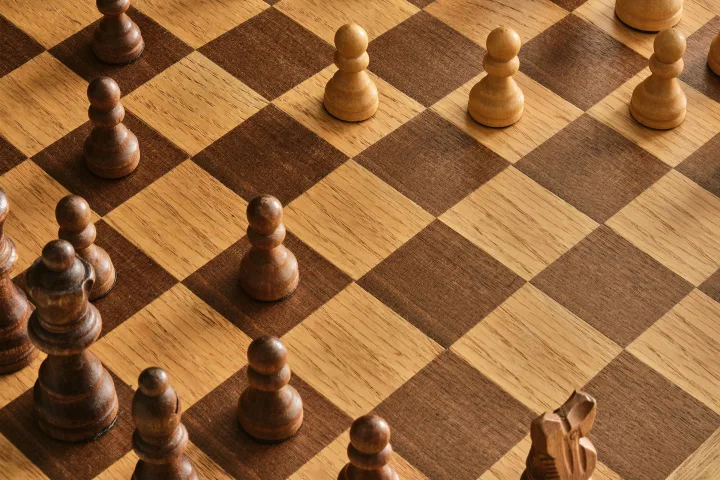
At first glance, checkers, backgammon and chess have a lot in common.
Two players, a board, pieces to move around. And a long history of people getting surprisingly competitive over them. But play a few turns and the differences become pretty clear. So what actually separates checkers, backgammon and chess?
Checkers is all about movement
Checkers is probably the simplest of the three to pick up.
You move pieces diagonally across the board, jump over your opponent’s pieces to capture them, and try to get your pieces to the other side. There’s no dice, so you always know what options you have.
That makes checkers a game of pure decision-making. You look at the position, work out what your opponent might do and choose your move.
The rules are simple, but the decisions can still get surprisingly complicated.
Chess gives you complete control
Chess takes that idea much further.
Each player has 16 pieces, and every type of piece moves differently. There are no dice and no random events. Everything that happens on the board comes from the players’ decisions.
That makes chess a game of planning. You can think several moves ahead, set traps, protect your pieces and build long-term strategies. A move you make now might only pay off much later.
If checkers is about seeing what’s in front of you, chess is often about trying to see what’s coming.
Backgammon adds a little chaos
Backgammon works differently.
You still have to make decisions about where to move your checkers, when to attack and when to play safely. But before you make that decision, you roll the dice. That changes everything.
You don’t choose which numbers you get. So you have to make the best decision you can with the numbers in front of you. A brilliant position can suddenly become awkward. A risky position can suddenly turn into a winning one.
The dice don’t replace strategy. They make you adapt.
Skill vs. luck: where does backgammon fit?
This is probably the biggest difference between backgammon and chess or checkers.
Chess has no element of chance. Neither does checkers.
Backgammon combines luck and skill.
The dice influence what happens, but they don’t decide everything. Over a single game, luck can play a big part. Over many games, good decisions start to matter much more.
That combination is part of what makes backgammon so replayable. You can make the right decision and still lose. You can make a terrible decision and get away with it. The dice don’t care about your strategy.
All three are strategy games. Just different kinds.
The games are often grouped together because they’re all classic two-player board games. But the type of thinking they require is quite different.
| Checkers | Backgammon | Chess | |
|---|---|---|---|
| Randomness | None | Dice | None |
| Main pieces | Checkers | Checkers | 6 types of pieces |
| Players | 2 | 2 | 2 |
| Main goal | Capture or block your opponent | Bear off all your checkers first | Checkmate the king |
| Style | Tactical | Tactical + strategic + chance | Strategic + tactical |
| Pace | Usually fairly quick | Quick or extended | Quick or extended |
Backgammon sits somewhere interesting between the other two.
- Like checkers, it has relatively simple pieces and movement.
- Like chess, it rewards planning, positioning and reading your opponent.
But then the dice get involved and make sure you can never completely control the game.
Which one should you play?
It depends on what you enjoy.
Choose checkers if you want simple rules and straightforward tactical decisions.
Choose chess if you like deep strategy, planning and having complete control over your moves.
Choose backgammon if you like strategy but don’t mind a little uncertainty.
Backgammon is easy to start playing, but there’s plenty to learn once you get into it. Every roll gives you a new position to solve, and every game can unfold differently.
That might be the best thing about it. You never quite know what the next move will bring - and unlike chess, you don’t have to see it coming.
Fancy a game?
No password, no download - and your opponent can take their turn tomorrow.
Play in your browser
Angela
One of the top 10 sweetest people, probably. German by birth, delightfully unserious by nature. By day, she shapes stories; by night, she beats her boyfriend at backgammon and writes poetry.